PI-Rods
Data-Driven Spine Surgery
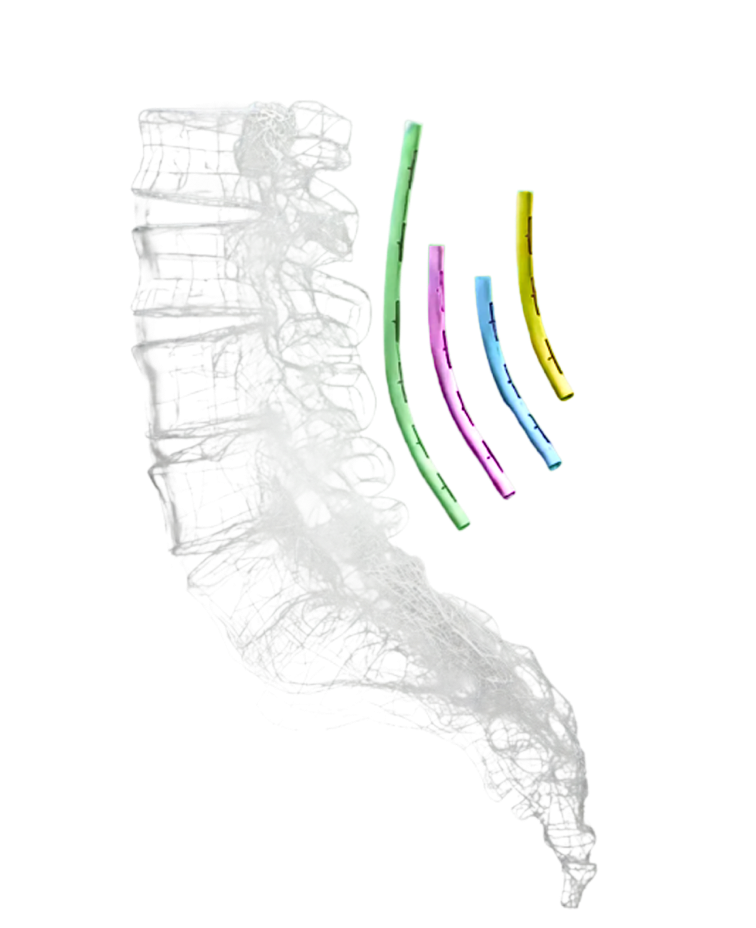
PI-Rod SEGLIGN™
Precision Segmental Alignment Technology
A thoughtfully engineered system of 6 pre-contoured rods matched to patient pelvic incidence (PI) categories. Each rod shape reflects segmental lordosis distributions derived from successful fusion outcome data, helping surgeons select the appropriate rod geometry for their patient's PI category.

Alignment
Pre-contoured
Segmental lordosis

.avif)

6 Rod Configurations.
One Measurement
Lordotic rod profiles derived from asymptomatic subjects and successful fusion outcome data with segmental lordosis targets per level and pelvic incidence.
.svg)
A New Approach to Patient-Specific Spinal Alignment
Today, generic rods do not account for patient-specific spinal alignment. Pi-Rods solve this by enabling surgeons to achieve ideal segmental alignment and improved surgical outcomes.
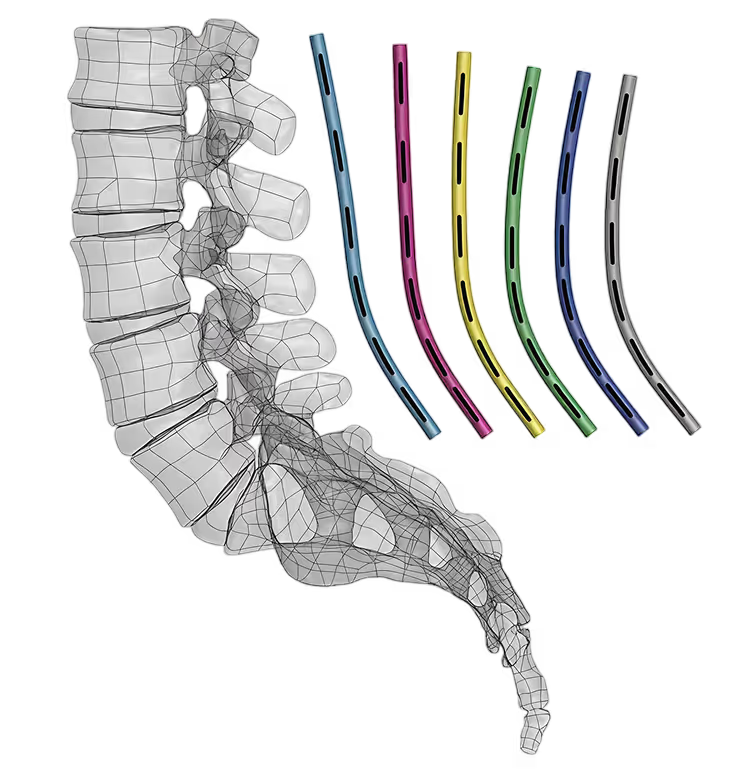
PI-Rod Data Derived Curves
.svg)
Simple, one measurement planning process
Beyond standard generic-curve rods
6 curved rod shapes with level-specific segmental lordosis distributions matched to patient Pelvic Incidence
Lumbar L1-S1 rods and short segment rods that are OR ready
The science behind the solution
Pelvic incidence adjusted Segmental rods
Pre-contoured rod profiles shaped by PI-stratified, level-specific lordosis targets derived from asymptomatic normative cohorts and patients with successful fusion outcomes.
Data Inclusion
Degen fusions with FU outcomes
Segmentally analyzed, no revisions, no adjacent segment
Excellent patient reported outcomes.
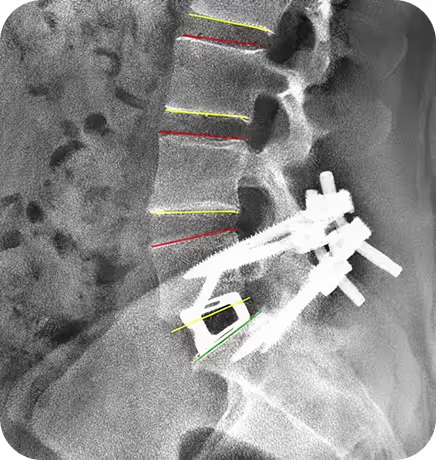
Supplemental Table 1: Normative PI-Adjusted Segmental Values for
Thoracolumbar Kyphosis and Lordosis.
Thoracolumbar Kyphosis and Lordosis.
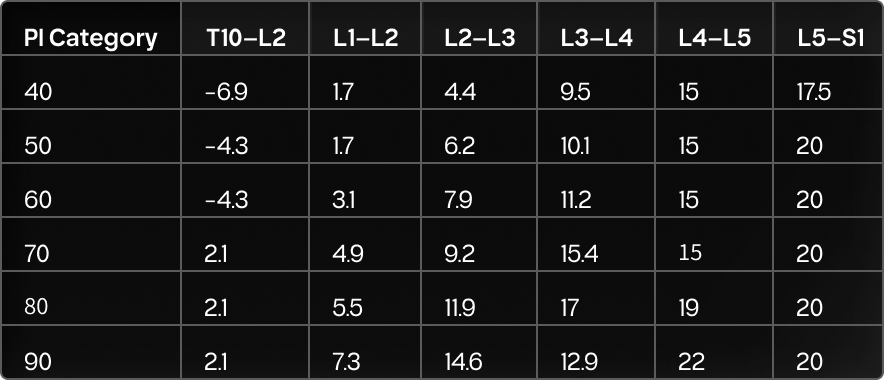
Diebo BG, et al, JBJS 2024
.avif)
A Single Measurement for Scientifically Backed Spinal Alignment
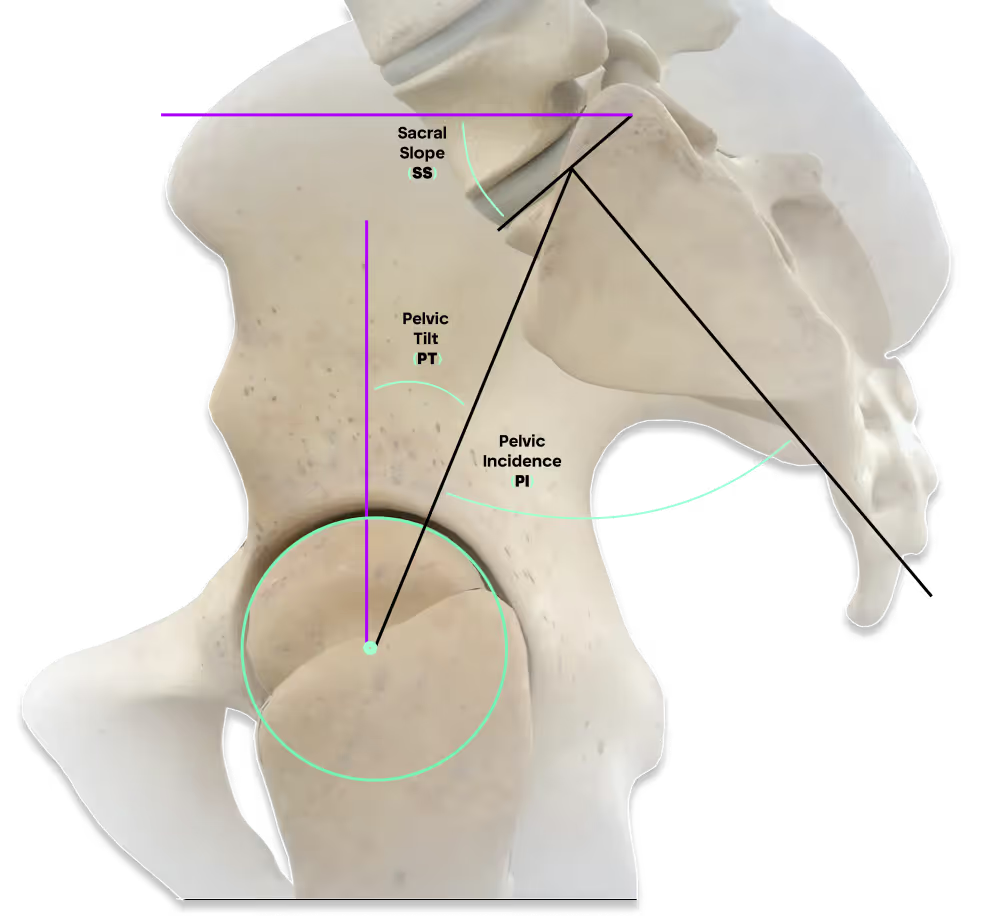
Accurate pelvic incidence measurement is the starting point for selecting the appropriate PI-Rod curve and achieving optimal segmental alignment.
1
True lateral radiograph showing lumbosacral spine, pelvis, and superimposed femoral heads
2
Mark femoral head center and S1 endplate. If two femoral heads are visible and not superimposed, draw a line between their centers and mark the midpoint.
3
Draw line from femoral head center to midpoint of S1 endplate and draw a perpendicular line from the midpoint of the S1 endplate
.avif)
.avif)
.avif)
.png)
.png)
Dorsal laser marks to designate target landing zone for pedicle screw tulip
Thick longitudinal line is the target zone
Watch it in Action